Tuesday, April 7, 2020

Notification from the Massachusetts Department of Unemployment Assistance (DUA)

A few weeks ago, the Greater Boston Legal Services reached out to me. I had volunteered there as a translator last year during a bout of unemployment, and now they were asking if I could help Cantonese speakers apply for unemployment insurance (UI). Having used the Massachusetts unemployment system twice, and whereby encountered deep levels of frustration, I was uniquely well qualified to help. This task could only be more in my wheelhouse if it required generating a chart and a pun, attaching them to a disc and flinging it all across a river.

www.mass.gov/dua houses the Massachusetts Department of Unemployment Assistance program. Hopefully many of you readers are unfamiliar with the ins and outs of unemployment assistance in America (although I suspect that is less and less true). The principle asserts that taxpayers who have paid into state coffers and find themselves suddenly unemployed can assuage their situations by receiving weekly payments in proportion to their tax contribution, until they find a new job. It is limited to state residents and state earned income, and not eligible to people who have voluntarily left their job or been fired for cause.

My frustrations with the system encompass both its design intentions and its execution. A pall of antagonism against "government handout takers" hovers over every new page of inane questions - I sense that the designers would rather ten worthy UI seekers be denied rather than one cheat take advantage of the system. When combined with a user interface design from the early 2000s without any sophisticated "user research", and you're left with a system that has nearly reduced me to tears on multiple occasions. I've needed to show up in person to the offices twice and still lost out on 2 weeks of legitimate claims - and I speak English and use the internet well! Imagine how hard this is to navigate for older immigrants, who empirically comprise the bulk of claims in Boston?

So you sign in with your social security and click submit - but of course you have to first check that camouflaged box on top that says you agree to a bunch of government legalese. Then the application process consists of approximately 10000 questions - no but legitimately there are 30 pages. The first question asks, "Did you work part-time last week?" If you didn't work at all last week, you are supposed to answer.... yes. What they mean is "were you eligible for unemployment last week?" The system assumes that you are applying on your first full week of unemployment, not taking in mind that quite a lot goes on when you unexpectedly lose your job, and a filing with the government might slip a few weeks. So if three weeks go by since your layoff date, can you apply for all three weeks? Yes you are eligible for full benefits, but the system only lets you apply for this week and the past week. If you want to get that third week, you have to call the state or visit in person - neither of which are options at the moment.

Another logical breach occurs with the following 1-2 punch of questions:
1) How would you like to receive your correspondence? Electronic or US Mail
2) Is English your primary language? Yes or No

Corresponding via US Mail makes me shudder, but if you choose Electronic and not English, the system tells you that Electronic correspondence is not available in other languages - although it actually is. You LITERALLY cannot proceed unless you change your response to indicate English is your primary language. A representative government is a government that forces you to lie.

The system requires choosing most applicable job title amongst a list written in the late 90s (I waffled between Research Statistician and Computer Informatics) for no real discernible reason. Further questions include:
  • Are you considered working on-call for this employer?
  • Are you a member of a corporation or a shareholder in this company?
  • Are you customarily laid off?
  • Are you required by a court order or other government agency to pay child support?
Lastly, you are required to look for work 3 days/week and fill in a Work Search Activity Log. This includes interviewing, attending training workshops, networking, going to the career fair. Is it an efficient way to show you are looking for work? No.  Does a legitimate job search require spending 3 different days each week doing these specific tasks? Some weeks almost certainly not. Does anyone actually ever check? No.

If you remain on unemployment for 8 weeks, you have to attend a Job Center workshop, to learn to find work, otherwise you stop claiming benefits. Does it matter if you went 7 weeks without a job then landed one with a start date in 2 weeks? Still need to attend. Does the state have any resources even remotely helpful to a data scientist? Rhetorical. I took the bus into a training center in Roxbury only to find out the session information was inaccurate, and had to shuttle to a session later that day in downtown Boston where I sat bored for 2 hours.

But the worst part are the numerous critical, time-sensitive correspondences between you and the DUA. Do they email you? Kinda. Does the email say anything? Never. It merely links to the department website, where you then need to log in just to read the message. The message isn't even a message, it downloads a PDF, which is always by default blocked by browsers. The platform is not accessible outside the US, and is frequently down for maintenance.


God forbid you forget your password. The password reset system is legitimately bugged, as I walked clients through the process and entered the exact right verification codes and the exact right security question answers only to get denied. If you need that password, the key to everything including even reading correspondence, you have to call the state or visit in person - neither of which are options at the moment.

I lost two weeks of claims because I didn't read a notification and respond within the assigned 10 days. I filed an appeal, which was denied with no explanation provided.

The people I help are all from Guangdong province, China. They range from 40-70 years old, worked as restaurant waitress, home care aide or masseuses, with educations ranging from 5th grade to finished high school. All of them are literate in Chinese, except for the one who is Viet Hoa, and speak standard Cantonese, except for the one whose Taishanese I understand maybe 60%. Many of them worked at restaurants I've frequented, meaning I've likely interacted with them before, but never gave much thought to their lives outside the restaurant. For my first "client", I tried to walk her through the website, directing her to the login link. As I struggled to figure out how to say "login tab" in Chinese, she told me she wasn't seeing what I was seeing. "Um, do you see that blue part underneath the light yellow part, above the white part, above the picture with the woman?" "No." The client finally sent me a picture of what she was seeing and I realized she was accessing on her mobile. I wouldn't even have conceived of that option for myself, but having now worked with 8 clients, none of them own a computer. Most of my clients have not figured out how to open the PDF messages on their phone.

When I first saw the estimated weekly payout value for my client, I thought we'd made a mistake. Only $120? I looked at her wages, did some quick math, and sat stunned wondering how anyone could survive in Boston on $20K a year. None of my clients make more than $35K of taxable income - here's a reminder that the tips-based economy really hurts in this situation. All of my clients live in the metro area and I can usually hear children in the background. Every single person I talk to needs this money, and none of them are realistically capable of applying for it on their own.
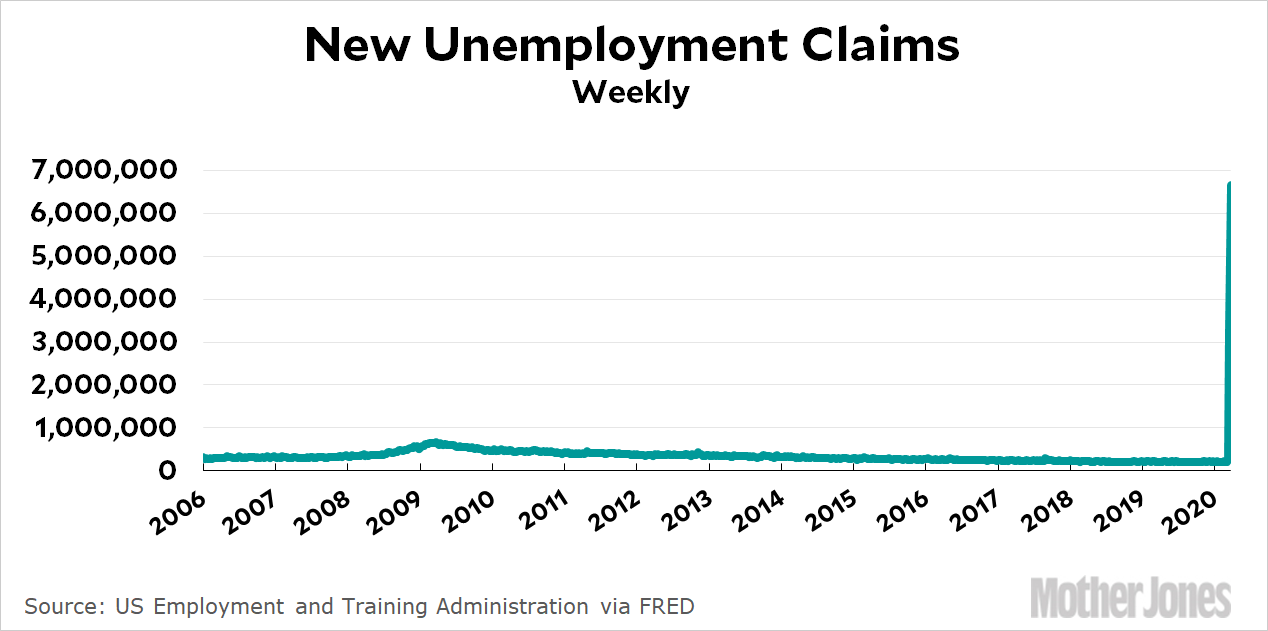
Good News: Unemployment Claims Soar Past 6 Million This Week ...

I know that building an unemployment claims system is hard. There are so many different types of workers, so many bad actors to account for, so many permutations of unemployment seekers and job discharges. And I did get paid a sizable chunk that covered my rent and expenses, twice, bringing me much relief in times of stress. To be further complimentary,  Massachusetts has waived the required waiting week period and work search activity requirements in this COVID-19 period. They've poured resources into keeping this overwhelmed system afloat, but fundamentally they're patching a broken system.

*****************

I learned that the DUA online platform was created in the early 2000s, when state governments were given federal dollars to invest in digital infrastructure. Invariably the decision makers didn't know how to make the best technical decisions, and the lowest bidding contractor they hired used some front-end and back-end technologies that quickly became obsolete. This is similar to how New Jersey has ended up needing COBOL programmers in this time of crisis. As time passed, only that contractor could maintain the system, no one could really add to it. I'm sure no product designer at the time was thinking about the experience of Haitian or Chinese immigrants. Mobile internet didn't even exist yet. Federal money has not been earmarked for state digital infrastructure in the same way since, and that poor decision in the early 2000s haunts us to today.

It's not fair to blame the programmers for their lack of multi-decade foresight, or the program manager who approved these fateful choices. What I encountered with the DUA was the product of a systematic defanging of US government depriving it of crucial expertise. A trend pushed by Reagan1 but picked up by all subsequent administrations has seen more and more work outsourced to private contractors. What has suffered has not been so much the quality of the product - I'm sympathetic to the argument that the private sector may do specialized work more efficiently - but rather the gradual erosion of expertise within government. As skilled government workers left for higher paying equivalent roles in the private sector, an "unvirtuous" cycle was created with less skilled employees training less and less skilled employees. The crisis of the federal talent pool was identified as early as 2000 in this Brookings article which stated:
Government must provide challenging work and the opportunity for growth. It is irresponsible to recruit talented graduates only to squander their commitment in a dead-end job with no chance to make a difference.
With all due respect to my friends who work in government, I see a lot of truth in this. When combined with the overly restrictive government GS pay bands, which limit all federal employees to below the salary of a second year Facebook developer, government is rarely seen as a desirable job for America's best and brightest.  As a result you have program flops like the Job Center I was forced to visit, which I was delighted to find panned in another article:
For example, the Department of Labor’s One-Stop Job Centers were intended to be an all-in-one resource for employment seekers, providing job seekers with career counseling and connections to both job opportunities and education and training programs. Unfortunately, they have failed to live up to their promise. ... What’s needed, according to the Brookings research, are performance measures that encourage cost-effective One-Stop programming that leads to higher wages, more tax revenue, and less taxpayer spending on unemployment insurance.2
It doesn't need to be like this. Civil service is an honor in many countries, where the best and brightest do hope to end up. Singapore is the most obvious example, where a variety of factors such as the Singapore Government Scholarship (free international tuition in return for years of service), higher wages and greater overall trust in authority has created a country where government actually works, and people want to work in government.

With regard to tech in American government, the salary difference might pose too high a barrier without substantial reform. But can we get creative? Can we not create a secondment system for burned out Silicon Valley workers? A three month semi-sabbatical lending your node.js or pandas expertise to federal programs? Can the FANG firms not scrape together a fellowship to instill some mid-career product managers in a 1 year position redesigning a decrepit state program? Surely there are better uses of societal capital than throwing $200,000 at  a senior software engineer to improve the backend data ingestion in adtech.

************
I'm glad the Greater Boston Legal Services in conjunction with the Chinese Progressive Association, Viet Aid and others have created a network providing service to underserved immigrants that is able to scale up in times like these. It's been quite stressful fielding texts and calls in Chinese, often with frustrating issues that I'm unable to resolve, between taking meetings at my real job, while ambulance sirens inexorably blare outside.  However, I'm grateful for my experiences and ability to help out those in need, while I keep my job. But if coronavirus teaches us anything, government is important. We need a way to collectively help each other out when disasters strike. We need a deep rethink of how government operates and equally important, who operates government.

1 https://www.washingtonpost.com/business/the-federal-outsourcing-boom-and-why-its-failing-americans/2014/01/31/21d03c40-8914-11e3-833c-33098f9e5267_story.html
2 https://www.theatlantic.com/politics/archive/2015/09/the-us-department-of-talent/404428/


Sunday, March 15, 2020

Covid, the viral Roman poet

COVID-19 is devastating because it's already killed ~6000 people worldwide and counting, halted economic activity, and pretty much affected all of our lives. I personally know one friend who got it, know of one person who lost a family member to it, and know of dozens who have had trips and events cancelled. The whole plague sucks.

For the vast majority of people who are not infected and practicing self-quarantine, one of the major effects of the disease is that there's not just nothing to do, there's nothing to talk about. Well, there's one thing to talk about, but there's nothing really to say about it. Coronavirus is all anyone can think about, and we all have the same opinions / experiences. "Flatten the curve", "social distancing", "not enough testing kits", "wash your hands", "I hear they'll be shutting down so-and-so" - there's only so much to say. We all are going through this very unusual, very disruptive, very uncertain times together, and we have NOTHING ORIGINAL TO SAY.

There's no new sports games, no new James Bond movie, no new trip stories, just everybody asking each other how many masks, groceries and rolls of toilet paper they've accumulated.

That's all. Coronavirus is not my muse.

Stay safe.

Sunday, March 8, 2020

Tech Debt

Insomnia kept me tossing and turning, and sometime after two in the morning I caved and walked to my couch and got on my laptop. I'm not sure how I got to it, but I ended up thinking about past jobs and job applications and Googling "Jana Boston." I had applied to the Boston-based startup Jana in 2016, and now I was seeing on Crunchbase that they had raised a $57 million Series D round in 2016.  Having moved from Hong Kong to Boston a few months before, I was desperately trying to land a data scientist position and ideally at a place with an international reach. I had come across Jana from job boards and read about their work providing digital access to the developing world, mainly rural India. The main product was a platform that enabled users in areas where mobile data was expensive essentially to trade ad views for free data. Everything seemed incredible - mission-driven smart people using software and data science to fight global inequality, all from a cool Downtown Crossing office with glass whiteboards and ping pong tables.

It did cross my mind that in recent memory, internet accessibility had increased dramatically in rural China without Jana's platform. But surely this fancy cool well-funded startup had already succeeded, and would be an amazing place for me to learn data science. I reached a final round interview before getting rejected. I later worked as a data scientist for GE and CiBO, getting laid off from both.

It was irritatingly difficult to find any news about Jana since 2016. There were a bunch of mixed reviews on Glassdoor, the historical funding information on Crunchbase and little else. On a hunch, I then googled "Jana Boston layoffs" and I came across some Boston Globe articles behind a paywall. At 2:30am I became a bostonglobe.com subscriber. 

It turns out that mobile data indeed had gotten a lot cheaper in India. Jana which had raised around $90 million overall had died an ignominious death. Our  $30m CiBO disaster looked like a fender bender compared to this train wreck. The tech startup world was a cruel one. I thought about the number of employees who had bought into the mission and ended up disappointed. I thought about the hundreds of thousands of lines of code that have been painfully written, tested, edited, deployed and discarded.

I came out of that wee hour search rabbit hole pretty jaded. I had very much bought into the story of Jana and was only now discovering that I'd have cast a losing wager. As I had done at CiBO. The following Thursday, February 13th, I learned that a company I nearly worked at, Wayfair, laid off 350 people in the Boston headquarters. What is it with all these layoffs? What did it portend for my current mission-driven tech startup? If these company failures are so common, how does anyone in tech make any money?

They say startup founders can go from feeling like they're creating a unicorn to worrying they'll go bankrupt in the same week. I seesawed similarly - about our financial success, our environmental impact, and my personal impact. What scared me the most was my willingness to ignore skeptical safeguards. Optimism had obscured my sensibilities in the past, and it could be doing so again.

There were ways for me to rationalize the macro view.  I could take the odds view, that the venture capitalists behind these companies were making bets hoping that 1 out of 10 might win - my work effort was a part of that calculus. 9,999 cancer researchers might fail to find a cure, but society needs them all to work hard for the 1 researcher who does succeed. I could think about the work that these startups do accomplish, which even if aren't directly built on, prove out a direction to either follow or avoid. Then there are the lessons learnt for everyone involved that potentially could help guide future endeavors.

Ultimately there are so many factors outside of your control that it becomes illogical to base too much of your sense of self-worth on the company that hires you. Job-seekers are rarely in a position of power, and though I tried to be extremely judicious in my last job search, I ended up needing to take the best position available to me. There's a fine line between being passionate and dedicated about your career and letting your company's success and impact define your dignity. Work hard, earn those wages, be realistic about what you can accomplish and influence what you can influence.

In another post sometime I'd like to dig deeper into the deluded nature of thinking we can solve world hunger from a computer screen in America. For now, I'd like to note that I find it far healthier to feel grateful for all that I have gained from my past jobs instead of dwelling on the lack of sustained impact.

Tuesday, October 15, 2019

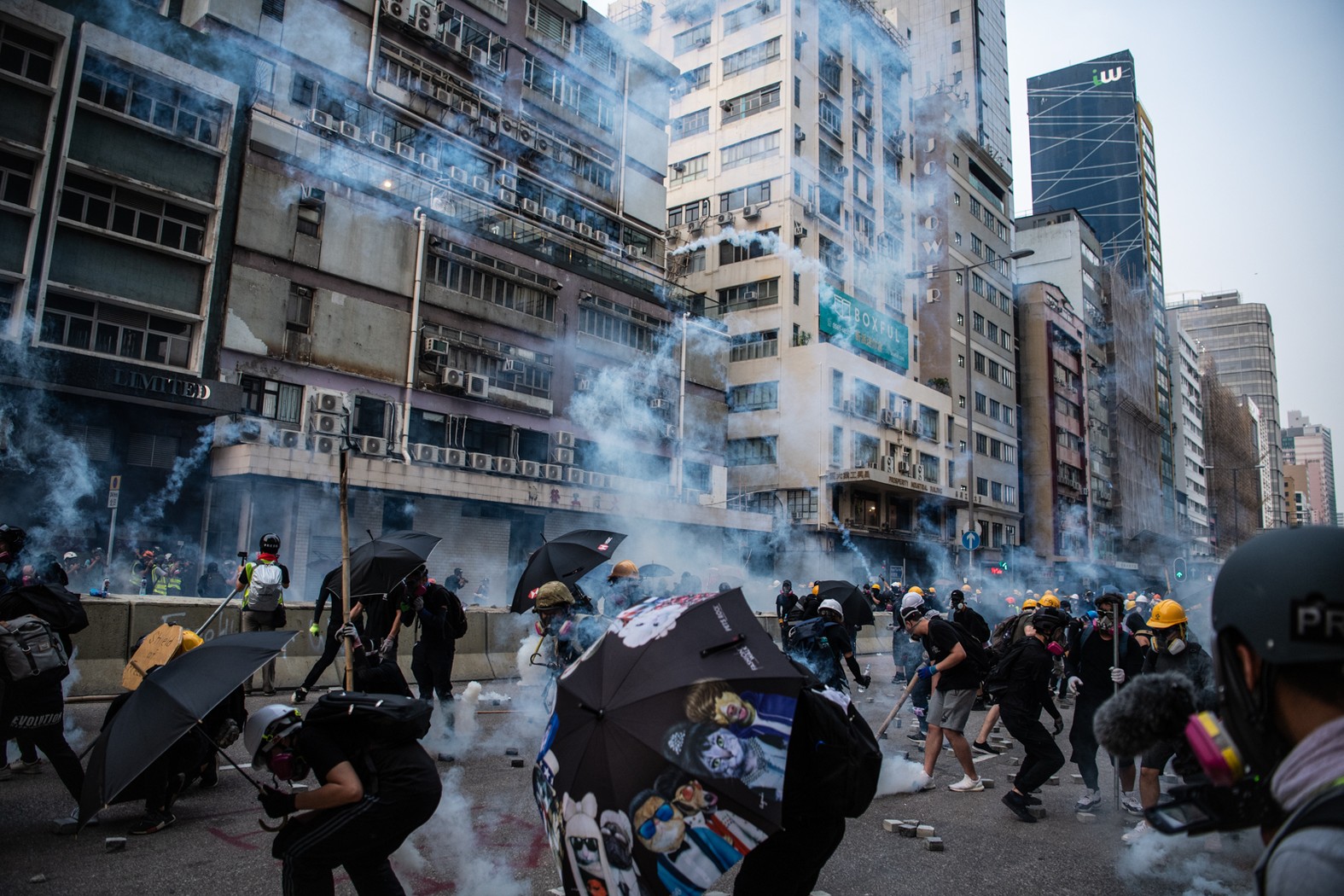
Hong Kong 2019

I felt a little ridiculous walking with the face mask on, passing by people out walking their dogs on a bright, normal Sunday afternoon. It was only until I was in sight of other face masks and black shirts when I glanced around for hidden Chinese cameras, and quietly slipped on the face mask. In the middle of Astor Place, New York, I joined a crowd of 300 odd strangers, and started shouting slogans in Cantonese. Some of them I knew - others I pretended to know. Together we sang the new adopted Hong Kong anthem 願榮光歸香港. We all had to look up the lyrics, no one pretended to know. A bunch of speakers involved in the Hong Kong democracy movement spoke, headlined by Denise Ho, the singer turned activist banned in mainland China. She was in town for a concert the next day, and despite not knowing any of her songs, I bought a ticket right there. 

Her concert took place in Town Hall, a proper venue near Bryant Park capable of seating 1500.  That Monday night, roughly 600 Cantonese speakers occupied the hall.  The lights dimmed, but an awkward 5 minutes elapsed without anyone taking the stage. Then, a male voice pierced the nervous chitchat - "光復香港!" (Reclaim Hong Kong!) What might have been taken as a rude heckle was instead immediately responded by several hundred "時代革命!" (Revolution of our times) Then a female voice from the other side of the balcony shouted "五大訴求!" (Five demands) and the crowd enthusiastically shouted "缺一不可!" (Not one less). I joined in earnestly, having learned all the chants the previous day. As the spontaneous cheering echoed sporadically for several minutes, and I couldn't help but beam with delight.  Denise Ho finally came on stage and opened with Bob Dylan's "Blowin' in the Wind." There were several more 光復香港 calls throughout the night. When a guest Taiwanese pianist gave a speech of solidarity and then launched into 願榮光歸香港 on the keys, everyone immediately stood up and started singing. Here in this Hong Kong bubble on 43rd and 6th was this passionate, collective political energy in the air that I had never felt before - and I was at Obama's 2009 Inauguration.

*****
This is probably the hardest post I've ever written.  As someone with strong ties to Hong Kong, the United States, and mainland China, the protests in Hong Kong have pulled me in a number of directions. However, I've been trepidatious about expressing my feelings for several reasons. Firstly, I'm aware that this is not my fight - I haven't lived in Hong Kong in nearly 4 years, and I carry an American passport. I'm not on the ground, dealing with the tear gas and the train delays.  Though I've grown my Chinese vocabulary to include 林鄭下台,被捕,黑警察,騷亂,光復, 示威,變質,暴徒 and  屌你老尾大台, I still struggle to read the Chinese news which is often cycles ahead of the English news. Ultimately, though I am deeply personally invested, I recognize this is not my fight.

Secondarily, even the limited sentiments I've expressed on social media have received hatemail. Numerous mainland Chinese friends have thrown me uninformed arguments and distaste. Like many, my family is split, with aunts, uncles and parents on either side of the conflict. Even in this divided age in US politics, the vitriol surrounding Hong Kong protests had affected me to new levels.  It is so much easier to just ignore it all.

Furthermore, I know that not being on the ground divorces me from the realities of the conflict. My view of these protests would likely change if they'd caused me to miss a flight.  I don't intend this to be a referendum of the aims or tactics of the protesters, or the emotional clashes with the police. There's enough back and forth already out there and I don't want to get involved in that.

Lastly, scary anecdotes have convinced me that by putting this out in the web, there is a non-zero chance that I will be banned from entering China. Or thrown into a Chinese prison upon arrival. It's a very low chance, but at this day and age, non-zero. I still love China, and I very much don't want to spend the rest of my life not being able to return. I really would like to see 張家界 Zhang Jia Jie and 九寨溝 Jiu Zhai Gou.


Laurel Chor - Vice News

It's perhaps my love for China that's made me uneasy. In years past, I've mostly been irked by anti-China coverage in Western media - nearly every New York Times article about China shades away from conveying the requisite China context, and instead leads toward painting a skewed dystopian attention-grabbing picture. Whether it is understanding how little Chinese citizens worry about privacy or how poor the country was in the 1960s, I have occasionally found myself reluctantly playing the role of China apologist. Even the South Park episode "Band in China" that came out this week (and I very much enjoyed) bristled me at first - South Park seemed to be punching down.

My time in the mainland forced me to reckon with my stereotypes and I became more sympathetic to a lot of PRC perspectives. I do believe that too many "international" institutions are just Western institutions. I see clearly the hypocrisy steeped in many Western critiques of modern PRC policies, especially those in Africa. It infuriates me when Americans shame other countries while lacking perspective of their own imperialism and genocide. Discussions I've had with mainlanders have convinced me that democracy is not some magic political panacea to societal ills. Educational dogma blinds most Americans from being introspective about this. At a time when American and British democracy are legitimately failing, it is not a good time to preach.

And I definitely believe that the PRC should be proud of the 300+ million people lifted out of poverty. The high speed rails, the QR mobile payments, the skyscrapers, the wind turbines - these are all awesome achievements. Not to mention the karaoke, the food, the millennia of history. Nowadays Beijing/Shanghai boasts a quality of life that I find comparable to New York, and I seriously considered moving there this year. In addition, I have so much respect for the hardships that nearly ever PRC citizen has endured. From the migrant workers to Shenzhen who toil in the factories to the Gaokao survivors now overeducated and underemployed, most mainlanders are tough.

The injustices carried out by the Chinese Communist Party (CCP) have hovered over us my whole life.  There is a cognitive dissonance to knowingly that this same government processing your visa is simultaneously repressing Tibetans and Uyghurs, performing forced abortions, and detaining political dissidents without trial. It's the sort of dissonance that one must maintain to have to stay sane and function in modern society. I don't believe that living in or working with China need be an endorsement of CCP policies.

With all those caveats out of the way, I intend to be very critical of the CCP, with a target audience of Americans without ties to China. I want to spread awareness of the protests in Hong Kong. I want people to be aware of their fundamental makeup promoting the will of the Hong Kong people and rejecting the CCP. I'm resigning myself to enraging many people.

The part that has surprised/infuriated me most is the angry and vocal reactions of mainlanders with no connection to Hong Kong. Seemingly apolitical acquaintances have suddenly come out and expressed outrage at Hong Kongers, whether or not the protests directly affect them. In Chinatown, NY in early August, protesting Hong Kongers were surrounded and outnumbered by people wearing red and waving the red and yellow flag. I had not thought that Chinese immigrants to the US would maintain this party line. Clearly I had underestimated the endurance and diffusion of the CCP-constructed nationalism. I did not engage directly with the counter protesters then, but there are two main anti-protest points that I would like to refute here.

The first is the quickfire accusation of "foreign interference." This shot, always unaccompanied by evidence, echoes the claims of "northern agitators" made by the segregationist Southerners during the Civil Rights movement. I could accuse these accusers of being agents of the CCP with just as much evidence. It's a lazy, and frankly offensive, point to dismiss the movement as artificial and take agency away from the Hong Kong protesters. Sure, there are many reasons for Western governments to root for unrest in Hong Kong, but this movement is very much homegrown. It's clear that these young activist leaders have done their homework, reading up on Gandhi, MLK, the Baltic Way and other non-violent movements. The demonstrations on the streets of Hong Kong were not drummed up in some US consulate boardroom - they matured in City U student group meetings in the 5 years since the Umbrella Revolution, exacerbated by the actions of Carrie Lam's government. The "foreign interference" accusation is mere willful ignorance of the true extent of the divide.

The second is even more offensive: the attack that Hong Kongers have been corrupted by "Britishness." Mainlanders claim colonial rule instilled an inferiority complex in Hong Kongers, making them ashamed of their Chinese heritage. The problem with that argument is that Hong Kong is not particularly British. Hong Kongers do not sip tea like the British, do not care about cricket, do not have panel shows, and do not cook bland food. While here is not the place to unpack the skewed social dynamics created by colonialism, the most important outcome of 150 years of British rule was not to make it more British. Rather it was to insulate Hong Kong from the Communist takeover and keep it a part of the global community. While mainland China was closing borders and smashing ancient treasures, Hong Kong was both competing with Taiwan to preserve "authentic" Chinese culture as well as welcoming international influence.  Alongside the British and Chinese,  Jews, Parsis, Armenians - with names like Sassoon, Mody and Catchick - helped shaped the city. They remain memorialized in street names and descendants.1  In modernity, the notable influence of Indians, Nepalese, Filipinos, Indonesians, Singaporeans, Malaysians, Japanese, and Koreans amongst others distinguishes Hong Kong from any mainland city. It is the success of this international city with a Chinese backbone that most upsets the CCP, and thus they in turn try to spin this strength as a weakness.
Laurel Chor - Vice News


This has made me realize how integral unity is to the Chinese nationalism preached by the CCP. It is an insecure nationalism, one propped up by propaganda instead of naturally inspired. The refusal of the Hong Kong Chinese people to buy into this nationalism undermines its entire existence. CCP leadership must think, "Our country is so great now! Why don't you want to be part of it?" They legitimately cannot understand how after all the high speed rail and economic growth, why Hong Kongers don't want in. Especially after so many CCP officials suffered so much in their lives to not have freedom, they feel bitter at these spoiled Hong Kongers who haven't suffered so much and don't seem to understand patriotism.

The CCP only knows two ways to instill patriotism - propaganda and force. This is a party founded by a man who said "槍桿子裡面出政權 - Political power grows out of the barrel of a gun." Winning the war of ideas, is not their modus operandi. It is one matter to get your citizens used to the cards they've been dealt, and quite another to get people to choose to give up their right to free speech. Chairman Xi and the CCP have chosen not to engage in this sort of debate. I see this Hong Kong protest not as a protest for Western systems, not as a protest against Chinese culture, not even as an expression of economic anxiety in a brutally unequal society - fundamentally this is a refute of the Chinese Communist Party and the ideals it stands for.

If the CCP really believed that Hong Kong was an inseparable part of China, then they should approach Hong Kong as partners. Instead of coming in with simplified characters and Mandarin speeches and treating the directorship of the Hong Kong and Macau Affairs office as a rotational bureaucrat role, they should allow Cantonese from Guangdong to handle affairs and emphasize the deep cultural ties. The actions of the CCP reveal their true beliefs: Hong Kong is not an inseparable part of China, Hong Kong is a subservient part of China.

Xi Jinping's CCP is not Mao's CCP or even Hu Jintao's CCP. Chairman Xi has stepped up the extreme nationalism and authoritarian oppression. Tibet and Xinjiang are not able to stand up to this CCP. Hong Kong is luckily in a better position, and should fight hardest, not just for her rights but also for the rights of Tibetans, Uyghurs and the more oppressed. Not only is it the moral approach, but it's the logical one - we are all fighting to allow for our identity in the Chinese nation. It is a fight against the CCP's iron-fisted approach at converting every citizen of the PRC into the same linguistic and cultural creature.

*****
I think I get why mainland Chinese are so worked up. In explaining Hong Kong's status to Americans, I have previously used Puerto Rico as an analogy. But a better analogy might be a situation where democrats won the presidency, and Texas tried to leave the nation. Liberals would be justifiably outraged. "Who do these Texans think they are?" Jurisprudentially, this is a terrible analogy, but it demonstrates the level of pride mainlanders have invested in this situation. "You are delusional to disagree with us. You cannot survive on your own."

****
This is an amalgamation of several conversations I've had recently in Mandarin with mainland Chinese (MC) immigrants in America, who don't think I look Chinese.
MC: 為什麼你會說普通話?Why do you speak Mandarin?
CAL: 因為我是中國人。Because I'm Chinese.
MC: 你不像中國人。 You don't look Chinese.
CAL: 可能你有道理。我是香港人。 I guess you're right. I'm a Hong Konger.
MC: 香港是中國不可分離的部分。Hong Kong is an inseparable part of China.
CAL: 所以我是中國人嗎? So I'm Chinese, right?
MC: 但是你不像中國人。But you don't look Chinese.

I think this encapsulates what's so wrong with Chinese nationalism. Humans don't fall neatly into ethnic national buckets. You can't build a society by suppressing ethnic, religious and linguistic differences. You have to embrace our humanness because that's the basis we all share. That is what the Hong Kong protests are fundamentally about. It is about a vision of the world that respects human dignity and difference.

1 Some of these descendants moved around the world and now write blogs about the Hong Kong protests.

Wednesday, October 9, 2019

Singapore 2047

Recently I've been listening to Billy Joel's 1976 song "Miami 2017 (Seen the Lights Go Out on Broadway)", almost on repeat. His song imagines an apocalyptic ending devouring Manhattan.  Though now it comes off as alternative fiction, when he wrote the song in 1975, New York was verging on bankruptcy and crime was rampant. The title of the song refers to him moving to Florida in this dystopian future, and telling future generations about the destruction of New York. The September 11 attacks and the collapse of the Twin Towers brought renewal and new meaning to the song.

I've been listening on repeat because the song invokes similar sense of despair of a dystopian Hong Kong. I have rewritten the lyrics to localize it to Hong Kong. It is titled Singapore 2047 (Seen the Lights Go Out on Causeway):

I've seen the lights go out on Causeway
I saw the IFC laid low
And life went on beyond New Territories
They all bought Xiao Mi 9s
And left there long ago
They held a concert out in Tsuen Wan
To watch the island bridges blow
They turned our power down
And drove us underground
But we went right on with the show
I've seen the lights go out on Causeway
I saw the ruins at my feet
You know we almost didn't notice it
We'd seen it all the time marching down Admiralty
They burned the temples down in Tin Hau
Like in that Spanish civil war
The flames were everywhere
But no one really cared
It always burned up there before
I've seen the lights go out on Causeway
I saw the mighty skyline fall
The boats were waiting at the ferry pier
The union went on strike
They never sailed at all
They sent a carrier out from Hainan
And picked the LegCo up for free
They said Kowloon could stay
And blew Lamma away
And sank the Island out at sea

You know those lights were bright on Causeway
That was so many years ago
Before we all lived here in Singapore
Before the 黑社會 took over Tseung Kwan O

There are not many who remember
They say a handful still survive
To tell the world about
The way the lights went out
And keep the memory alive

Monday, September 9, 2019

Going down the wrong Hemingway

It's been a long while since I wrote a proper trip recap blog. My Colombia and Brazil trips were probably deserving of writeups, and the Panama/Guatemala New Year's adventure certainly was, but I didn't have the energy at the time and now my primary source memory is depleted. I figure then that I should get out this June 2019 Eurotrip before I get similarly busy.  A good chunk of that trip, especially its coinciding with my job saga, is documented in this post. Here I'll try to go through the travel and linguistic components about the trip.

The main goals of the trip were to 1) catch up and travel with my Brazilian friends who recently moved to Basque country, 2) explore France after an 11 year absence, 3) see the USA Women dominate in the World Cup and 4) attend Windmill Windup, the most famous European ultimate tournament.

A fantastic credit card decision and its signup bonus allowed me to turn a $2800 trip into $300 + points. I'm not sure how that worked but I'm glad it did.

19:15 - Flight takes off from Boston Logan (LOG)
06:45 - Land at London Heathrow (LHR), 5 minutes ahead of schedule
07:00 - Apparently this plane can't find a jetbridge
07:15  - Finally leave the plane, turn into accelerated mode
07:45 - Immigration at Heathrow took me nearly an hour last time. For some reason, we fly through in 10 minutes this time
08:00 - I find the counter selling tickets for the National Express bus transfer to Gatwick. I thought that airport transfers might be free, especially in socialist Europe, but no, this costs £25! It's #727 and will come in ten minutes.
08:10 - The national express bus supposedly arrives.
08:15 - A bus named 727 arrives, tells us we can’t get on, the bus we want will be here shortly
08:35 - The bus arrives
9:30 - make it to London Gatwick Airport (LGW)
9:35 - My goodness, this is really the working class version of Heathrow isn't it? Should I be pronouncing Gatwick with a Cockney accent?
9:58 - Made my way through security, and I spot what must be Gatwick's only saving grace - Wagamama. I think I have time for this.
10:22 - Ok I barely have time. Gotta run.
10:24 - Woo at the gate....and I can't find my ticket. It must have come while running. Why must they be so awkwardly sized?
10:25 - This gate has another security check - for extra frustration - but they do allow me to ask the desk to print out a new ticket. This has happened to me before, but instead of printing out new boarding passes for the remaining two legs of my trip, I get a normal paper printout of my itinerary. The airline staff underlines the current boarding time with her pen.
10:28 - Boarding begins with an Englishman announcing, "Group one, grupo uno only please" in the most gringo way imaginable.
10:31 - "Group two, grupo dos." Surely this is not helping anyone.
15:00 - Land in Madrid. Exit the gate completely disoriented, and somehow have to pass through an EU checkpoint to get to the interesting bits of the airport.
15:10 - Try to get into priority pass lounge, they won’t let me in without a boarding pass. Insist I get it from Iberia desk
15:20 - Get in line at Iberia desk. Take one of those slips of paper with my ticket number like it’s a fucking DMV
15:50 - Take another slip
16:37 - Finally get another sheet of paper at the boarding desk. Toss the waiting ticket and earlier sheet into recycling portion labeled papel 
16:55 - Give up and run to the gate
16:57 - "Lo siento, pero yo perdió mi boleto." I try to explain my plight to the man now at the gate, and he points me back to the Iberia office. "No!" I exclaim back in terror.
17:00 - The man, who does have access to a computer, finally prints me a new boarding pass
18:15 - land in Bilbao on time and I’m genuinely surprised to avoid serious disaster

As it so happens, Antonio is also flying into Bilbao from London, with his flight landing about an hour after mine. I sip espresso by the terminal exit while I await his arrival. He arrives, we hug, and he gets into his rental car and we're off.

The road wraps through evergreen valleys all looking gorgeous in the high evening sun. A sign soon welcomes us to Araba/Álava, where Vitoria-Asteiz is capital. The slashes and dashes are indicative of the interesting status of this region - the Basque Autonomous Community. Basque is famous amongst linguistic nerds as the biggest language mystery of Europe, one of only a handful of languages in Europe that don't belong to the Indo-European language family (others being Finnish, Estonian and Hungarian). No one knows where the Basque people or language come from, nor do they know any other language related to Basque. I believe the elevated mystique of Basque really speaks more to the lack of linguistic diversity in Europe. Asia and Africa consist of numerous ancient language families interspersed with undocumented isolates. But for Europe, it is cool to see/hear very white people, virtually indistinguishable from Castillian Spaniards, speaking this incomprehensible language full of x's and z's.

Raquel awaits us at their lovely apartment overlooking a small plaza. I drop my stuff off and we quickly go for a walk and explore this ancient, very Europeanesque provincial capital, filled with cobblestoned streets, tiny alleys and bars overflowing into the street. The unusual plot points of my job interview that night are explicated in that other post, and while I felt the ticking clock of my Urbint future hanging in the balance, I did try to manage my beating heart and immerse into this romantic European setting. We find our way to a bar with wine and pintxos, which are essentially Basque tapas. Various grabbable plates, often little sandwiches or croquettes or toothpick equipped items, are just laid out on the bar for the taking. It'd be a heavy week of meat, cheese and bread. I rushed back for my interview and then slept like a jetlagged log.

The next day we planned to drive to Bilbao, but began the day with cafe con leche and huevos fritos at a nearby cafe. Upon finishing, I suggested going for a leisurely walk around the city, as the previous night had been rushed. The walk through the cobblestoned-lined hilly streets eventually led us to the Cathedral of Santa Marta, which casually dates back to the 14th century. The Gothic arches tower over the city, and upon discovering that a tour had only just begun, we decided why not and joined in. The tour was entirely in Spanish and was my first real language test of the trip. I strained my ears to pick up architectural words but found myself completely lost while Antonio nodded, laughed and exclaimed "oooh." It turns out that while I was scattering my brain for Gothic terminology, the guide was focused on the engineering marvels behind the recuperation and preservation of this cathedral, which had been falling apart.

In the main church space, the guide pointed out the "Arcos de Miedo", or Arcs of Fear. She pointed out stone blocks comprising the massive Gothic arches, how they used to run parallel, and how now many had visibly slipped up to 15 degrees. I started to feel the fear of the Arcos de Miedo collapsing. Taut metal wires swept up through the ceiling vaults, trying to shift blocks back like braces on a giant set of teeth. The tour took us up wooden staircases (I couldn't help but think about the Notre Dame fire) to a tower that might have been the highest point in the city.

The tour ends on the ground floor with a slide show on a once painted mural. The mural had in fact been painted numerous times over the centuries, presumably by the town's best artists, but restorers in the 1970s had mistaken the layers of priceless paintings as inauthentic and removed them. Whoops. So now we have a slide show to recreate what those paintings showed. Technology.

We're finishing up the tour when we realized that we're way behind schedule, and barely made it to the rental car place before our time slot was up. We then repeated that scenic drive back to Bilbao.

The Guggenheim museum is the headliner in Bilbao and one that holds great lore in my family. My dad is obsessed with the architect Frank Gehry and my brother built a model for his 9th grade Western Civilization project. We had visited in 2000, making this 19 year gap possibly the longest gap between city visits in my recorded memory. 

Having since worked in building engineering, Gehry's masterpiece now holds more meaning for me. His crumpled style devoid of straight edges could be dismissed as wasteful - an architect friend has accused him of not playing the same game as architects designing useful spaces - but I enjoyed the sheer number of interesting angles. Each turn of the corner excites. The design plays with interior and exterior space, seamlessly melding the two. Exhibit wise, a bunch of enormous metal parabolas set up by Richard Serra reminded me how much I enjoyed learning the formula for an eclipse in geometry class.

Our exit from the museum took us to its beautiful patio, adorned with a giant spider, and up a large bridge with a gorgeous view of the Guggenheim set behind the river. The rest of the day included a tour up a century old funicular, randomly walking into an outdoor symphony orchestra concert, randomly returning back to our hotel to find a performing string duet, riding a surprisingly well developed subway, before posting up at an American bar selling craft IPAs. It was there that I accepted one job offer minutes before my job offer from Urbint came in.

With that job kerfuffle behind me, the three of us continued bar hopping. One bar had some corporate promotional immersive experience where we entered a dark booth and voices in Spanish tried to make us imagine we were in a prehistoric period. To be honest, I didn't understand much then and I remember even less now. I do remember asking the promoter "¿de donde piensas nosotros estamos?" mostly referring to Raquel, who is Brazilian of Japanese descent. "¿Tailandia?" she guessed, to Raquel's uproarious laughter. 

At a later bar, Antonio told me the group next to him were Portuguese. "Go talk to them!" I said. "Nah, not my style," Antonio responded. So I went up to the group, asked "Fala Portugues?" They replied "Sim!" At that point I couldn't think of any other Portuguese palabras, and gestured with two hands at Antonio and Raquel and stepped away. They hit it off comparing Portuguese and Brazilian differences. I then found myself talking to a bunch of rather obnoxious middle aged Englishmen on a stag do.

Bilbao is a lovely town to go out in. The nightlife has the pedestrian-friendly density you'd expect from an old European town, big enough to have entertaining city action and small enough to avoid attracting too many American tourists. Freed from my job drama, I practiced ordering vino y cerveza at the bars perhaps una o dos veces demasiadas.

The next morning wasn't a great one. Our plan was to extend the hour long drive to San Sebastian into a more epic roundabout that would include a transit of the rio Nervion - Nerbioi via the Vizcaya Bridge and the monastery at Gaztelugatxe. The Vizcaya Bridge is unique as the world's oldest transporter bridge, where the bridge does the actual moving instead of the cars. The entrance of the bridge was devilishly difficult to find amongst curvy one ways on steep river bank roads. Once on the bridge, surrounded by other cars, the experience was fairly odd - it just felt like a slow moving boat, terrible for my hangover, with the river view obstructed by other cars. Still it was cool to drive (sit) through one of just a handful of these bridges in the world.

On the other side, we stopped at the side of a playground to recalibrate the GPS. I stepped outside for some fresh air, and realized I needed a bit more than fresh air.  Noticing a dumpster a dozen yards away, I staggered towards it. I didn't quite make it, instead pivoting and retching deep into the hedges next to me. I remained in full vomit mode for over a minute before I could look up, whence I found a bunch of Spanish kids playing merrily along, their wide-eyed parents staring me aghast. They turned away quickly, as if they were the ones ashamed for peeking. 

The coastal drive was lined with stunning seaside views - or so I was told. The fetal position in the backseat was not ideal for sightseeing. I was upright though when we passed by a mysterious castle. There were no flashing lights, there were no signs, there were no armored guards - there was just a castle casually hanging out within view of the road to San Sebastian. The castle was no large mansion, it featured numerous turrets, and the lack of tourism infrastructure made me suspicious. But there was no trick, this castle dating back to the middle ages was inhabited by Basque nobles. The interior was locked, but we got to walk around, admire the weathered masonry and pretend we were trying to scale the walls. This completely unplanned castle stop was a keeper. 
Tourism infrastructure did not lack in Gaztelugatxe. A lonely hermitage built in the 10th century on a peninsula jagging into the Bay of Biscay is made accessible via a scenic stone staircase snaking along the rocks, as well as hundreds of filled parking spots. What would otherwise be a charming but localized attraction exploded in popularity when HBO CGI'ed a castle behind those steps and called it Dragonstone on Game of Thrones. The steps were where Jon Snow and Davos Seaworth had many conversations. Admiring the incredible steps leading up to coastline views of lapping blue waves and grassy mountains - it reminded me of the west coast of Ireland but somehow Spanish - I felt fortunate to visit Gaztelugatxe. It's isolation precludes it from many a Eurotrip.

Another notable pitstop was in a Basque beach town where the Spanish language disappeared - at least in written form. Everyone still spoke Spanish, but when visiting the bathroom at the local pub, I had to guess between Gizona and Emakumea. We later drove straight through the town of Guernica, subject of a famous anti-war Picasso painting, but were too starved for time and tapas to stop. The road journey was an embarrassment of day-tripping riches.

Late afternoon we rolled into Donostia - San Sebastián where a new atmosphere was instantly palpable. It felt festive and monied and distinctively non-American. Boasting a renown beach but well off the path of a Madrid or Barcelona-centric voyage, San Sebastian seems to be where the French, Spanish and other Europeans go to party away from Americans. It was also one of the cities in The Sun Also Rises by Ernest Hemingway, which I had read just a couple months before. In honor of that, I will attempt to write my San Sebastian recap in the style of Hemingway.

Our hostel exit made us pass by an outdoor bar. Real damn teaser.  The group desired to get tight in the city though, not in a hostel which could be damn well anywhere. We were blocks to the beach, La Concha, and walked along the promenade until the promenade elbowed away from the beach. A gelateria was well-positioned at the elbow bend.  The promenade was a lovely scene, with trees down the middle and clean black tiles on either side, full of pedestrians, skateboarders and mirth. We took one of the first side streets coming out from the bend Calle Mayor and were instantly rewarded. We could see the street terminated at a gorgeous cathedral, lit at that moment by the pinks and oranges of a setting sun. Four or five blocks before us gave way as we edged towards the cathedral as if pulled by a magnet hidden within its naves. The mirth increased until it reached pure cacophony.

The church was a stellar one, with wide staid columns and flying buttresses. But it was another church, not a place to get pintxos or get tight.

"How about this bar?"
"It's really crowded."
"They're all crowded."
"Do we want to do a sit down or just grab pintxos standing?"
"Let's get a drink standing first, and then decide?"
"Ok."
We walked down a thin side street into another thin side street. There Raquel and I were able to order 3 generously round glasses of wine. Ham and cheese sandwiches were just sitting there while the wine was poured. We grabbed pintxos standing.

The thin streets opened up into a wide plaza. Antonio exclaims, "See Cal? Every city in Spain has a plaza de Espana."

The night saw us get tight, but not as tight as the previous night, for we were too old for consecutive hangovers.

San Sebastian is known for its fine dining.


We got up early to walk along the Concha towards the funicular, our second of the trip. The funicular led to a mountain with a sweeping view of the bay - it reminded all of us of Pao de Azucar in Rio de Janeiro.

At the end, the sideria may have been too good, because by the time we were in the car, Antonio had 13 minutes to do a 21 minute drive. I had personally been lapped by Antonio in a Cincinnati go-cart facility once - maybe twice - so I knew he could make up time. He made up enough of it for me to see my train slowly exiting Hendaye station. There's not much more to it then that - I exchanged my ticket for the next train 4 hours later, and sat next to an old French woman who was a retired English teacher from Bordeaux.''

There was a Cafe Iruña in San Sebastian, but it was not the same Cafe Iruña mentioned many times in The Sun Also Rises, which is in Pamplona. Later in Paris I would visit La Closerie des Lilas, which he habituated in A Moveable Feast, where I ruefully spent 7 euros on sparkling water.

Paris with another GE friend Valeriy I will skip, because Paris is Paris and I could not do it justice in just 1 full day even taking 40,000 steps, nor can I do it justice here without adding 40,000 words. I'll merely mention one encounter from the morning I left Paris. Searching for a Parisian bakery experience, I found a placed called O Coffee with flat white on the menu. I thought about how to say this in French, before realizing surely if it says flat white on the menu, flat white must be the French name. Before I could even get a word out, the barista asked me, "What would you like mate?" I sputtered out, "Je vou...je...I'd like a flat white please." The barista smiled and passed the order behind him in French. I stepped sideways in line, paused and asked, "Are you Australian?" The barista gave a bemused grimace, said, "Yes. Well bit of a mix really. Greek, French." 
"Did you know I was an English speaker?"
Slight nod.
"How?"
The barista shrugged. "You don't look French mate."
The flat white was terrific.

From Paris I took the train to Reims for a World Cup match. That match and my tournament in Windmill Windup will have to get its own post.

Tuesday, July 9, 2019

The Book of Job

Rumors had been whispering for a month. The new financing round hadn’t gone well, the expected deals hadn’t materialized, and something had to give. Free lunches had been cancelled, the weekly company updates had changed to biweekly and the last one of these had been mysteriously cancelled. I started updating my resume.

One Tuesday I learned from backchannels that there would be “a layoff of not insignificant size” the next day. Despite some reassurances from a colleague that I should be safe, that night I tossed and turned until 3am, when I firmly concluded that I would be laid off. A mix of terror and exasperation hit me. I’d been laid off just a year previously, and I didn’t want to be unemployed again. When I awoke Wednesday morning, the commute to work felt like marching to the gallows. 

The process was efficient. They called half the company one-by-one into private offices, handed us exit papers and collected our badges and laptops. By 10am I was out, and by 11 had rendezvoused with other ex-employees at the Friendly Toast, where the bar was empty but open. The ensuing hours reached a level of day drinking rivaling my senior year St Patrick’s Day.

When I sobered up, I was sad, bitter, exhausted but excited. I was sad because CiBO had been my most enjoyable job. I had done interesting work with smart coworkers serving a great high level mission. It paid well, hadn’t been too stressful, and I could run to work on occasion. It had even taken me on a crazy 1 day trip to Malaysia. While the job didn’t trap me in the office long, I found myself home practicing Scala and studying the growth stages of corn. It bristles me now how fruitless this effort feels. Furthermore, the immediate termination was much rougher than the 1 month notice GE had given me. I had no time to mentally prepare to wake up the next day with absolutely nothing to do. I was bitter that after this long journey of changing careers, having spent so much time reflecting on what I wanted and then working so hard to actually get there, I had ended up with nothing. Twice. And during winter again. My browser cookies still remembered the Massachusetts unemployment website. I joked that I was now an expert in company collapses, of all different sizes. I got plenty of sympathy laughs, but when faced with the reality of yet another job hunt, I was exhausted before I even began.

Considering how much I care about my career, it’s a bit ironic that I’ve spent so much time funemployed that I'm able to name each period. Leaving Hong Kong, backpacking around Asia and returning to the US was my SabbatiCal. The period between GE and CiBO that included two international trips were my Callivanting days. This period? More like a Calamity. While I’m lucky to have had so many employment breaks - so many of my friends haven’t had any - this one was ill-timed and unwelcome.

However, I was excited because I had options for in 2019, data scientists are in short supply.  CiBO had been a fantastic tech environment where I’d worked closely with great software engineers. I had accrued enough confidence that I was a pretty badass data scientist and almost immediately began working with 20+ recruiters. I quickly realized though that I wanted, and had enough savings, to take my time. I wanted to explore transitioning out of a technical role, perhaps into strategy or product management. I wanted to return closer to the energy sustainability domain. And I wanted to move back to Asia. It was a tough multiple-criteria decision problem to optimize.

The best part of this Calamity was the many people who reached out to me and helped. It seems like I caught up with 100 friends that first week, juggling all time zones to the east and west. I chatted with friends about their professional lives and gained valuable insights into how other jobs worked. I had plenty of deep conversations that convinced me that my heart was still in Asia. I specifically targeted Beijing, Shenzhen, and Saigon, cities where I felt I could find cool jobs and cool people.

Saigon had vibed with me when I first visited during the SabbatiCal. I knew there was a decent tech scene, with a large concentration of foreign “digital nomads” utilizing a local ecosystem full of talented (and cheap) coders. I wasn’t sure what the options were for someone with no local country or language background, but my Saigon-dwelling friend Sam Axelrod connected me to someone who’d know. This guy gave me a rundown of the work international consultancies were doing, the locally-disconnected digital nomad scene, and the rapid government-backed digitization across the economy. He inadvertently went on a rant against those big name consultancies collaborating with government officials and multinational corporations to perpetuate modern colonialism. Having also lived in an Asian former colony, this rant won me over - he had expressed my views, albeit much more profoundly and eloquently. When he told me that in his previous role leading a UN bureau, he had made all his employees learn Vietnamese, I was sold. Then the conversation took a turn. “I lead a startup consultancy now. We have a Taiwanese manufacturing client and only one Chinese speaker on staff…and all of our work is really about using data to drive decisions….actually we could really use someone like you.” And so the informational chat turned into a job interview. A week later, I booked tickets to Ho Chi Minh City.
This is a fine ad for funemployment


In the meantime, I had already had a trip to New Orleans to visit my friend Jason Siu and partake in Mardi Gras. I took my employment frustrations out on hurricanes and Sazeracs, and somehow found myself walking down 10 blocks of Bourbon Street double fisting beers looking for Jason. The next morning, I awoke wearing a bushel of beads and needing to dry heave. I had scheduled a handful of recruiter calls before a late afternoon flight back to Boston. As I laid down on the couch in utter pain, I talked to Amazon on speaker phone and tried to go through my work history. I didn’t get a second interview. I barely made it to the airport, where I passed out on the dirty floor while JetBlue delayed us for 2 hours. When I took my middle seat, the old man sitting window asked me, in a volume indicating he was hard of hearing, “Did you enjoy the parades?” I did my best not to puke on him.

Back home, I planned an Asia trip to be part fact-finding mission and part friends catchup tour. I eschewed traveling to new places in favor of looking for jobs in familiar cities. I initially outlined a Saigon to Hong Kong to Shenzhen to Beijing to Paris to London trip, allotting myself 3 weeks. When my friend Doug Heimburger sold me hard on his 40th birthday celebration, I swapped out Shenzhen for Tokyo, then dropped Paris. I realized my dates in Hong Kong would coincide with Tosscars, the annual awards ceremony/party for the Hong Kong ultimate community. The ceremony’s hosts are secret until the event itself, and I had never been a host. I texted the organizers, and asked them if they wanted a super secret host. They replied that the theme was Carnival, and asked me to bring over Mardi Gras party supplies. Coincidentally I got that text while in a cafe in New Orleans, and walked outside to see a street vendor hawking party jackets. I got a sympathy $20 unemployment discount, and that jacket has proven to be one of my best investments.
I made a pun so bad, Vietnam decided to banh mi

Even since 2016, Saigon’s change was noticeable to me. There were more foreigners around District 1, Southeast Asia’s tallest skyscraper on the horizon and flat whites served in some coffeeshops in District 3. My first sight was a continuous stream of motorbikes street with no crosswalks and I had to relearn street crossing in Vietnam (with confidence and without eye contact). 

The startup consultancy was located above a clothing store and consisted of 6 employees. Though I’d be the only non-Vietnamese speaker, I knew I’d fit in well. My main worry with the role was whether I would stagnate technically. Though I was excited to learn about the Vietnamese economy and management consultancy in general, there was a good chance that the clients wouldn’t be ready for any interesting modeling, and I wasn’t sure I was ready to give that up. On my last day there, I was offered a role as an analyst, with the expectation that if I proved I could adapt to Vietnam, I would create and lead the company’s analytics division. There was a lot to consider. Between the motorbike traffic, lack of a subway (coming in 2020!) and inexorable heat, Saigon life is not without its challenges. But the food, coffee, nightlife and people I met in 3 days convinced me I could adapt to love the city.

Saturday morning I flew into Hong Kong. I had told myself that I shouldn’t move back to Hong Kong, that it wouldn’t be good for my career. But as my taxi zoomed down Gloucester Road past the pretty buildings, I thought to myself, I could carve a good life for myself here again. A few hours later I was in my party jacket hidden on the top floor of the Winery in Sai Ying Pun. It had been weird keeping my arrival a secret. As I heard the voices of my friends entering from below, I so desperately wanted to burst out and shout my presence. I managed to contain myself until Donna Doubet announced a surprise guest from America, and I flew down the stairs, threw some authentic New Orleans beads into the crowd, and awkwardly raised my arms, a little uncomfortable with the sudden attention. This was only my second time back in Hong Kong since I left, and I couldn’t imagine a better rewelcome party.

The next several days consisted of as many as 7 appointments a day, catching up with friends and family. I also got some intel on the work environment, and while the tech scene is growing rapidly, I confirmed my suspicions that interesting and high paying data science jobs don’t exist in Hong Kong yet. 
Doug popping his cherry blossoms
Doug’s party in Tokyo was a Hanami 見花, meaning cherry blossom viewing party, because of course Japanese has a word for that. We had rented out space at Yoyogi Park, roped off and carpeted to enforce a shoes-off policy. Organizer Niji had arranged for a small arsenal of whiskey, champagne and a buffet of sandwiches. To meet the formal dress code, I paired the New Orleans party jacket with grey suitpants. Even at this party, I met a programmer who tried to recruit me. I realized that having a skillset unbound by geographies or business domains could be a blessing and a curse - too many options means you have to restrict yourself to stay sane. I decided not to pursue working in Japan. 

Taking place a month past his 40th birthday, the Hanami was really a farewell party for Doug, as he had just accepted a promotion that would relocate him to Seattle. We spent the entire weekend bemoaning the challenges of managing an American career while smitten with Asia. Discussions with him and Austin taught me that for us, location can be more important than job, and wanting to learn a language is a legit factor in deciding location.

In Beijing I was fortunate to get connected with good tech people. My friend Joohee had moved from Hong Kong, and it was only face-to-face when I learned she now worked in Chinese tech venture capitalism. She connected me to the CEO of an AI startup trying to develop the flying car, and through another friend I met the former head of data science at Mobike. I learned about the speed of China’s 9/9/6 tech culture, the role of WeChat in everything, the way government-led directives influence entrepreneurs, and the sheer abundance of data available. Joohee evangelized her bullish views on China, and I was reminded how much I missed the uniqueness of Beijing life when I found myself telling my life story to an attractive group of film producers in Mandarin. I seriously wondered if I should focus on returning to China. However, barriers included the vast amount of competing Chinese programmers and the increasingly domestic nature of China’s tech scene that render multilingual people like me no longer highly valued. And this is before getting to all the moral and logistical complexities enforced by the Chinese government. 

By the time I got to London, I was exhausted. I met with friends there in interesting companies, and tried the city on for size. In my most productive conversation, I talked with a former coworker and ultimate teammate about how moving to Vietnam might mean missing weddings and/or an ultimate tournament in Amsterdam that I’d been invited to. “Oh, you have to go to Windmill.”  And so I did. I returned from my round the world trip with lots of renewed friendships, and lots of discussions comparing the social joys of living in Asia, the family warmth of staying in the east coast, and the asymmetric way America treats international experience. While Asia would always respect my US work experience, the converse was not necessarily true. I decided I needed to at least explore interesting jobs in the US to compare with the offer in Ho Chi Minh City.

-----

I was full of energy the first month back in Boston. I pursued all those things I never have the energy to do when working. I read voraciously, studied languages, attacked the gym, played ultimate and went through a TensorFlow tutorial.

The second month was harsh. The job interview process plodded along frustratingly slowly, and all my hard work towards self-improvement was largely irrelevant to the interviewers. It became difficult to sustain such intensity, and the uncertainty slowly ground me down. Not knowing where I’d live or what sort of income to expect made it difficult to plan things, date or try new activities. 

The Vietnam offer was still outstanding, while two local options were in play. One was a tech startup where I had wanted to work back in 2016 that was now recruiting me. They had given me a dataset assessment back then, and I laughed when they sent it again, virtually unchanged. With years of practice now under my belt, I did a way better job on the assignment. In the followup interview, a kid just out of college review the assignment with me. It was a little stunning to see 2018 as his graduation year, but he introduced to me a little trick transforming linear variables like date or time into cyclical variables, by taking the sine and cosine of them. The interview went well and they indicated they would bring me onsite. Then without explanation, they wished me luck and rescinded the onsite interview.

The second was a large tech firm where my friend had internally referred me as a product manager. I was excited to pivot away from straight technical work, which often strained my extroverted personality. That firm’s HR operated slowly, and weeks elapsed between followups. Finally in mid May, they brought me onsite for a marathon session of interviews. While the experience was largely positive, I reflected over the weekend and realized I needed to follow my heart to Vietnam. With that realization, I then booked my Europe trip for Windmill.

That following week my brother and sister-in-law visited, and I told my whole family that I was moving to Vietnam. They did not take the news well. They mainly believed that the low salary, distance from tech thought leadership and lack of any incredible valuation growth were wrong for me. Only my father, who had spent a decade working in Shanghai, considered the possible upside of being in a growing economy at the right time. The next day at breakfast, my brother asked me if I was happy at my last company. I had been, because we had been working towards real global impact, and that in the months since I hadn’t come close to any company that excited me like that. “Oh there was this company in New York that tried to recruit me last year. They’re using machine learning to solve city sustainability issues. Would that interest you?” “Uh, yeah, no shit that’d be cool.” “Damn, I should have remembered to bring this to you earlier.” “Yes, you should have."

I figured it was too late to apply as I had already interviewed onsite at the big firm. But my brother emailed the CEO, who responded extremely quickly, and the next day I spoke with the head of their urban analytics team. The conversation went shockingly well and I learned that this guy’s previous role was leading analytics for the city of New York. A Google search revealed him to be kind of a big deal, as well as a visible minority in the field. It’d be really cool to work for him. They sent along their dataset assessment and told me to take a week on it. I pulled an all-nighter and turned it back in a day and a half, producing some of the best modeling I had ever done including applying the cyclical transformation trick I’d learned just a couple weeks before.

Finally on Monday, a full two and a half weeks after I’d gone onsite, the big tech firm gave me an offer. It was at the level that I had wanted and legitimately thrilled me. It’s funny how much more interested I’d become in the role when the offer became tangible. Still, I made arrangements to speak with the Vietnam CEO and sent an email to the New York startup informing them of the offer. Again they got back to me right away, and I soon had a call scheduled with the CEO for Wednesday morning. The Vietnam CEO also asked to speak Wednesday morning, and I had a followup with the big tech firm for Wednesday afternoon. Wednesday evening I would fly out to Spain. It would be the most eventful Wednesday since the CiBO layoffs, and similarly, I couldn’t sleep at all the previous night. I had 3 separate timelines at my fingertips, with 3 very different cities and 3 very different roles.

The New York CEO informed me that they typically bring people onsite before offering roles, but he’d be willing to make an exception if I was committed. I replied that if they could meet my salary expectations, I’d also take an offer without coming onsite. He then said he’d have his people get back to me.

The Vietnam CEO and I had a good heart-to-heart chat, but he was not able to meet the salary expectation that I wanted. It was an enormous risk for both of us, and while I’m not exactly risk-averse, I realized that his startup probably wasn’t as ready as other places to get value of data science.

Finally, the Boston tech firm gave me their final offer and told me I had until Friday 5pm EST to accept it. After how long they took to get back to me, I was a bit resentful about the tight deadline they’d given me, but they had other candidates in queue.  I then proceeded to fly to Spain.

When I landed in Madrid on Thursday, I had emails from the New York startup. They wanted me to go on Google Hangouts with some more employees. Sigh. I wanted to vacation, but this was my future, so I said sure, how about 4pm EST/10pm Spanish time? Considering I’d done my final interview with CiBO in Tokyo, this wasn’t even unusual for me. I flew to Bilbao, met up with Antonio and his wife Raquel, grabbed a quick dinner and drink, then hustled back to get on Hangouts. The interview was full of challenging questions, but by now I’d done so many interviews I was almost on autopilot. In one of the last questions, they asked me how I approached a dataset. Tiredly, I asked back, did you see my assessment? Surprisingly, one of the interviewers excitedly responded, “yes, I thought it was awesome, it was so cool how you transformed those cyclical variables.” Fuck yeah, I thought. Finally I told them I had until 5pm tomorrow to respond to the tech firm.
¿Donde esta el email de Nueva York?
The next day we touristed around beautiful Bilbao. I tried to enjoy it as much as I could, but the whole day I was aware of the time in New York. 9am... they’re getting into work... lunchtime….no email yet. 11pm Spain was my deadline. By 9pm we posted at a bar with wifi. I tried to be a fun conversationalist but the anxiety was real. At 9:30, the New York startup sent me an email…all it said was “hang in there, we’ll get back to you within the hour.” By 10:30, they still hadn’t. 10:45, the inbox was still unchanged and I’d lost the ability to make conversation. At 10:50 Antonio lent me his phone and I called someone at the company. No response. Finally at 11:00, I sent an email to the big tech firm saying, “I accept!”

The burden was gone. I’d be a product manager in Boston. It’d be a good life. I approached the bartender and said, “Tres tragos de tequila por favor. Tengo un nuevo trabajo!”

I brought the three shots back to our table and prepared to do a toast to the new job. Glass in the air, I sneaked a peak at my phone and glimpsed one new email. “Wait hold on! We have an offer for you!” I put my glass down and sighed.

In the ensuing telephone call, I admonished the New York startup for being late. They quantified their offer, apologized for missing the deadline by 5 minutes, and asked me to consider rescinding the acceptance. That thought literally made my heart quiver - I hate going against my word. I sighed, told him I’d sleep on it, and to please send a formal offer via email. When I checked my email that night, there was a formal offer that was slightly larger than what he’d said on the phone - turns out accepting the other job was a good negotiating tactic - as well as a response from the big tech recruiter revealing her joy at my acceptance. 

I did sleep on it, sent the offer around to my family, and ended up choosing the New York startup - Urbint. The email to the big tech firm rescinding my acceptance was the hardest email I’ve ever had to write - I had to get my brother to draft it for me. I clicked send on the train to Paris, and now, two weddings and a painful move later, I’m in New York City.

The Calamity was longer than desired, but was an invaluable period reconnecting with friends. My lessons learned:
  • It is so valuable having a strong, diverse peer network to inspire and raise you
  • It's important to be patient
  • It's important to be bold
  • It's ok to prioritize location
  • Jobs are like buses. You wait around for ages and then they show up all at once
I've chosen to be patient, to put off my return to Asia for an exciting job opportunity. Hopefully I'll be here in Urbint and New York for a long while. If I'm in this position again in a year, I'll know I'm truly cursed. But if that happens, I'll tell big companies to pay me to work at their competitors.